



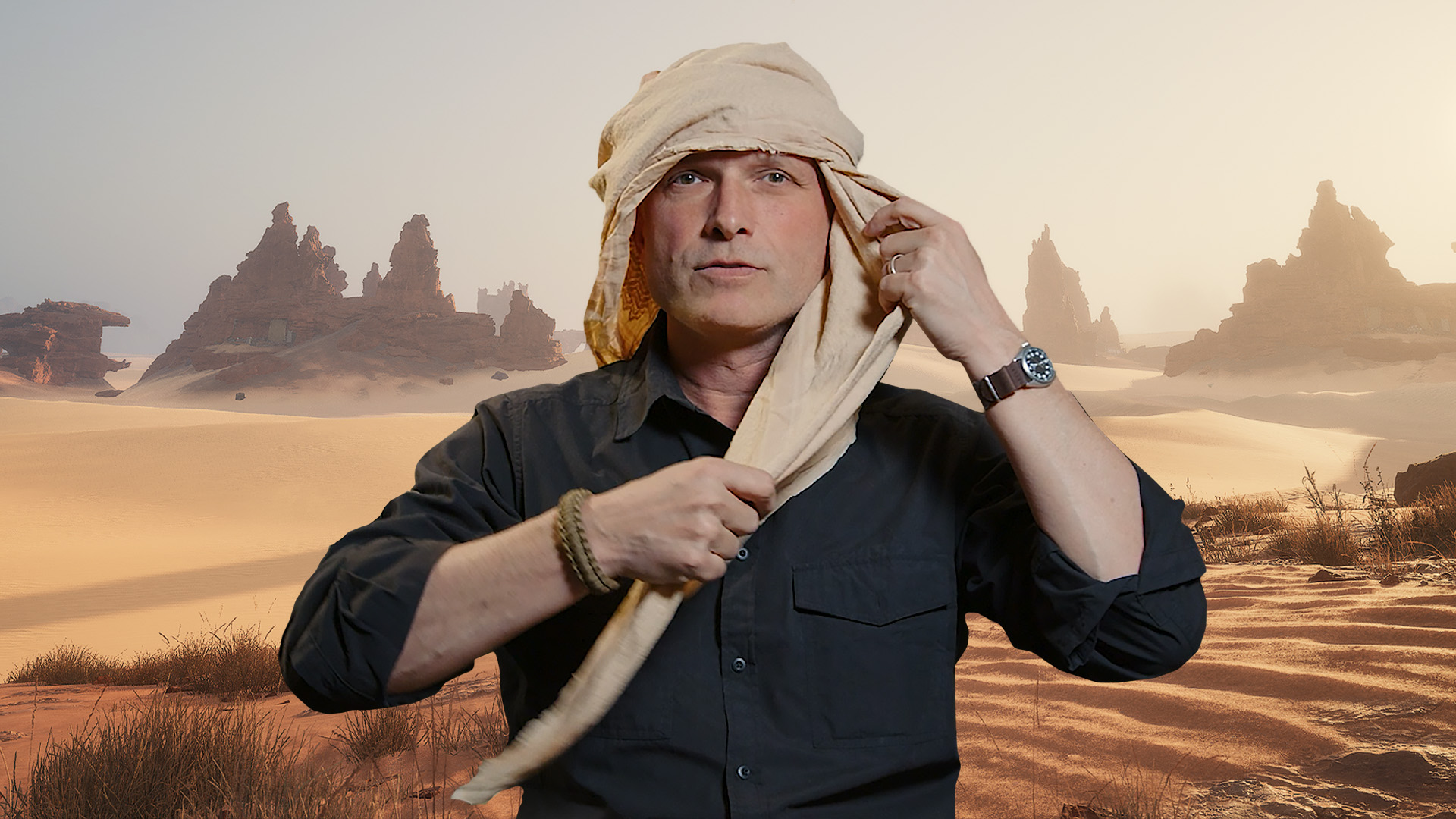
What would it really take to survive on Arrakis?
In a new featurette, British military survival expert John Hudson shares his perspective on the unforgiving desert world of Dune: Awakening, drawing on his experience advising on survival training in extreme environments, including deserts.
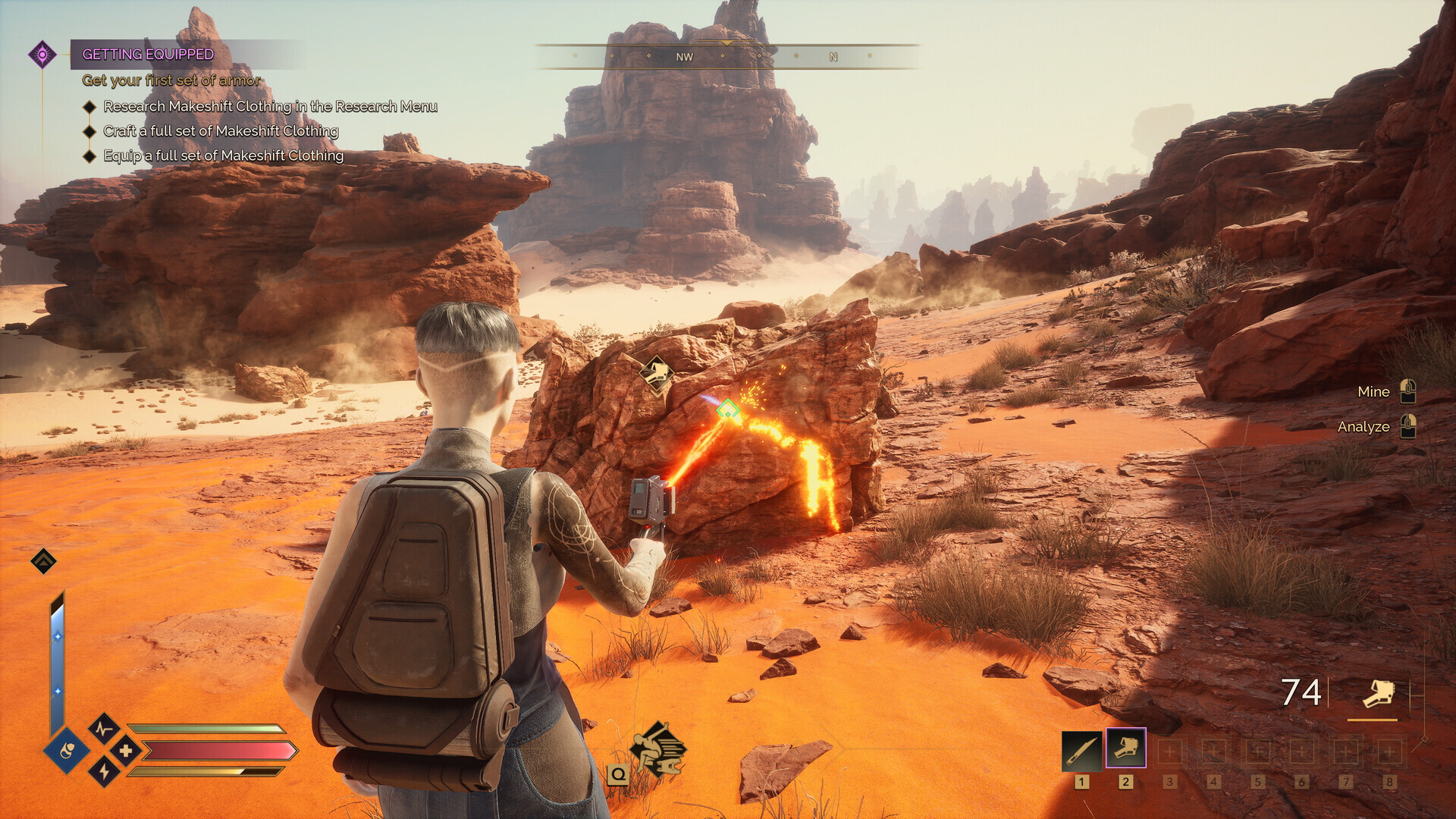
Hudson highlights the authenticity of the environments created by Funcom’s Dune: Awakening team, particularly the game’s vast desert vistas and weather-sculpted rock formations.
“The rocky outcrops that the team of Dune: Awakening have built are incredibly realistic,” Hudson says. “They look like they have been sandblasted by desert storms. They look sculpted by the wind. Yet within them you can see some hope of refuge. That is certainly true to the deserts I have been to.”
For Hudson, the landscapes of Arrakis evoke real-world desert environments across the globe: the sweeping dunes of Namibia; the rocky, eroded terrain of North Africa and the American Southwest, including Utah; and Chile’s Atacama Desert, whose harsh, Mars-like surface has made it a location for planetary-exploration training.
But the most compelling part of Frank Herbert’s imagined world, Hudson explains, is the way it pairs an impossibly hostile environment with human ingenuity.
“The interesting part of Dune is that it invents a world where you wouldn’t be able to inhabit it without human technological intervention,” Hudson says. “The ability to create a micro-habitat that you can move around in is fundamental to survival.”
In the world of Dune, that idea is embodied by the stillsuit: a life-preserving technology designed to help its wearer manage water and endure the planet’s punishing climate. While the technology is fictional, the core survival principle is not. In an extreme desert, people must protect their bodies from exposure, conserve resources, and create a personal microclimate through appropriate shelter and clothing.
A Nuclear Reactor in the Sky
Desert survival begins with understanding the danger posed by heat and direct sunlight.
“Any exposed skin needs to be covered,” he says. “Wear goggles if you have goggles. Desert environments are brutal, and they will kill you. The people who live in these environments are covered from head to foot.”
Finding shade is an immediate priority for anyone suffering from heat exposure or sunstroke. Without protection, the body’s internal temperature can rise rapidly, impairing judgment, coordination, and the ability to make sound decisions.
Hudson notes that hydration is equally critical. In normal conditions, a person may sweat roughly half a liter of water per day. In the desert, that can rise substantially – and during intense physical exertion, water loss can increase to several liters per hour.
Even a relatively small hydration deficit can be dangerous.
“If you are one liter behind on hydration, you will experience fuzzy-headedness, dizziness and become disoriented,” Hudson explains. “That is a bad thing for survival.”
As dehydration and heat stress worsen, the body begins to malfunction. A rise of only a few degrees in core temperature can seriously affect physical and cognitive performance; at more severe levels, heat exhaustion and heat stroke can lead to unconsciousness and death.
Sandstorms, Exposure and Isolation
Arrakis is not merely hot. It is volatile.
Hudson points to sandstorms as one of the desert’s most immediate hazards: sudden, violent events that can emerge with little warning and turn exposed travelers into targets for punishing winds and airborne sand.
“Sandstorms can come almost out of nowhere,” he says. “You will get sandblasted.”
This is where the environmental design in Dune: Awakening resonates most strongly with real survival experience. Weathered rock formations do more than define a striking landscape; they can offer shelter, shade, navigational reference points and a temporary refuge from the elements.
The game’s deserts are designed as spaces that demand preparation and awareness. Players face a world where travelling unprotected can be lethal, resources matter, and the environment itself can become as formidable an opponent as any rival faction.
The Ultimate Test on Arrakis
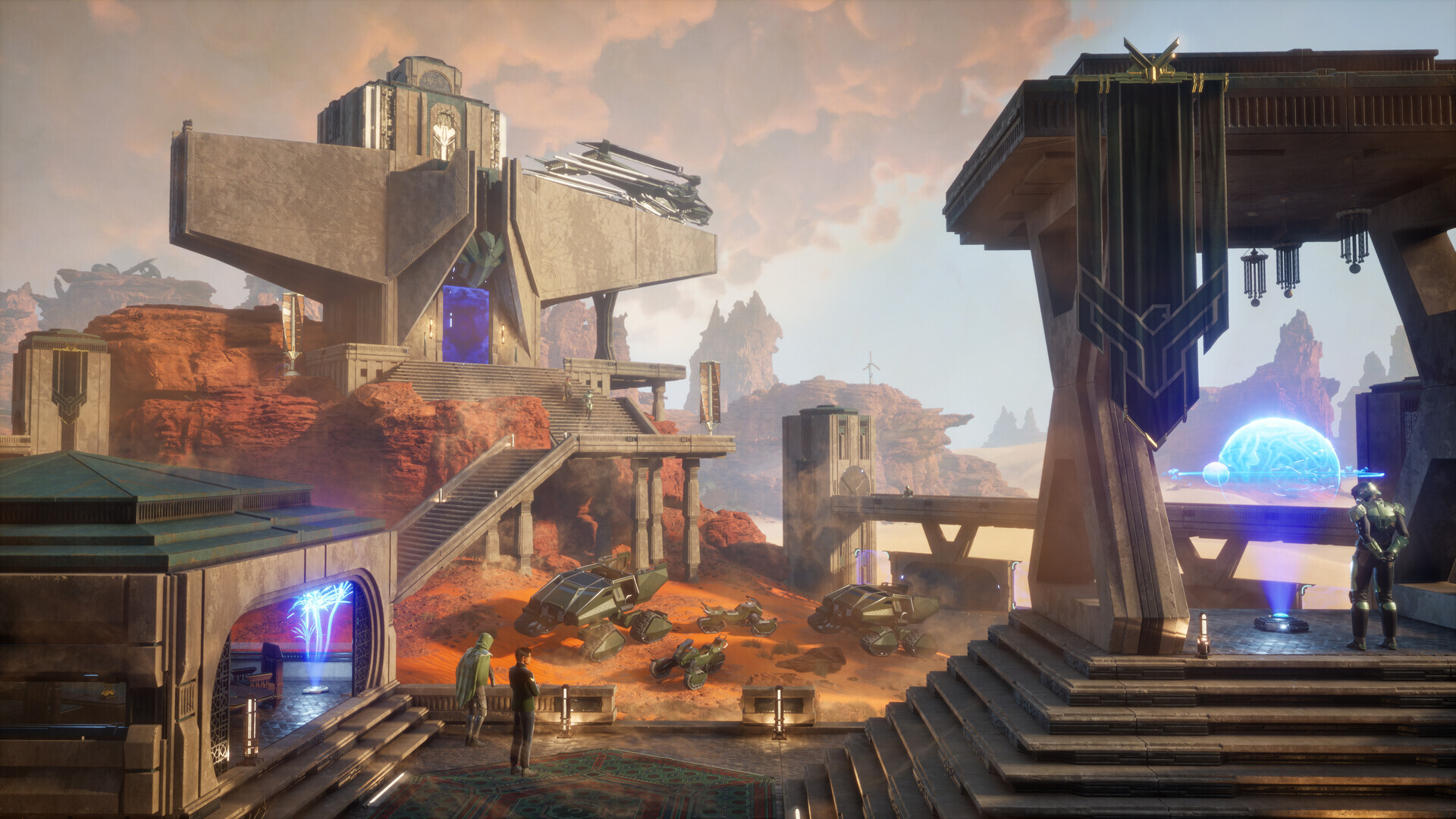
From the towering dunes and jagged rock formations to the threat of sunstroke, dehydration and sudden sandstorms, Dune: Awakening brings the harshness of Arrakis to life through a world built around survival.
Hudson’s assessment is clear: the desert is not simply a backdrop. It is an active, lethal force that must be understood, respected, and overcome.
And for those brave – or reckless – enough to test themselves against the sands, perhaps even in a Worm Thumper Championship, Arrakis offers the ultimate survival challenge.
Dune: Awakening is the open-world, survival game from Funcom, inspired by Frank Herbert’s seminal sci-fi novel and Legendary Entertainment’s award-winning films. Players are sent to the most dangerous planet in the universe, where they must survive the desert, build their power and shape the future of Arrakis.
Dune: Awakening launches on consoles on September 22, bringing the fight for survival on Arrakis to a new audience. For Funcom, however, September 22 is more than a console launch – it is a major milestone for the new and improved Dune: Awakening. New console players, alongside both new and returning PC players, will arrive on Arrakis with access to every addition and improvement introduced since the game’s PC launch, as well as all new content and updates arriving in September.